About Email Me
Product Design UX/UI B2B SaaS MVP LegalTech AI Integration

AI Platform for Legal Services & Lobbying

Transforming complex legislative workflows into an intuitive AI-powered B2B platform.

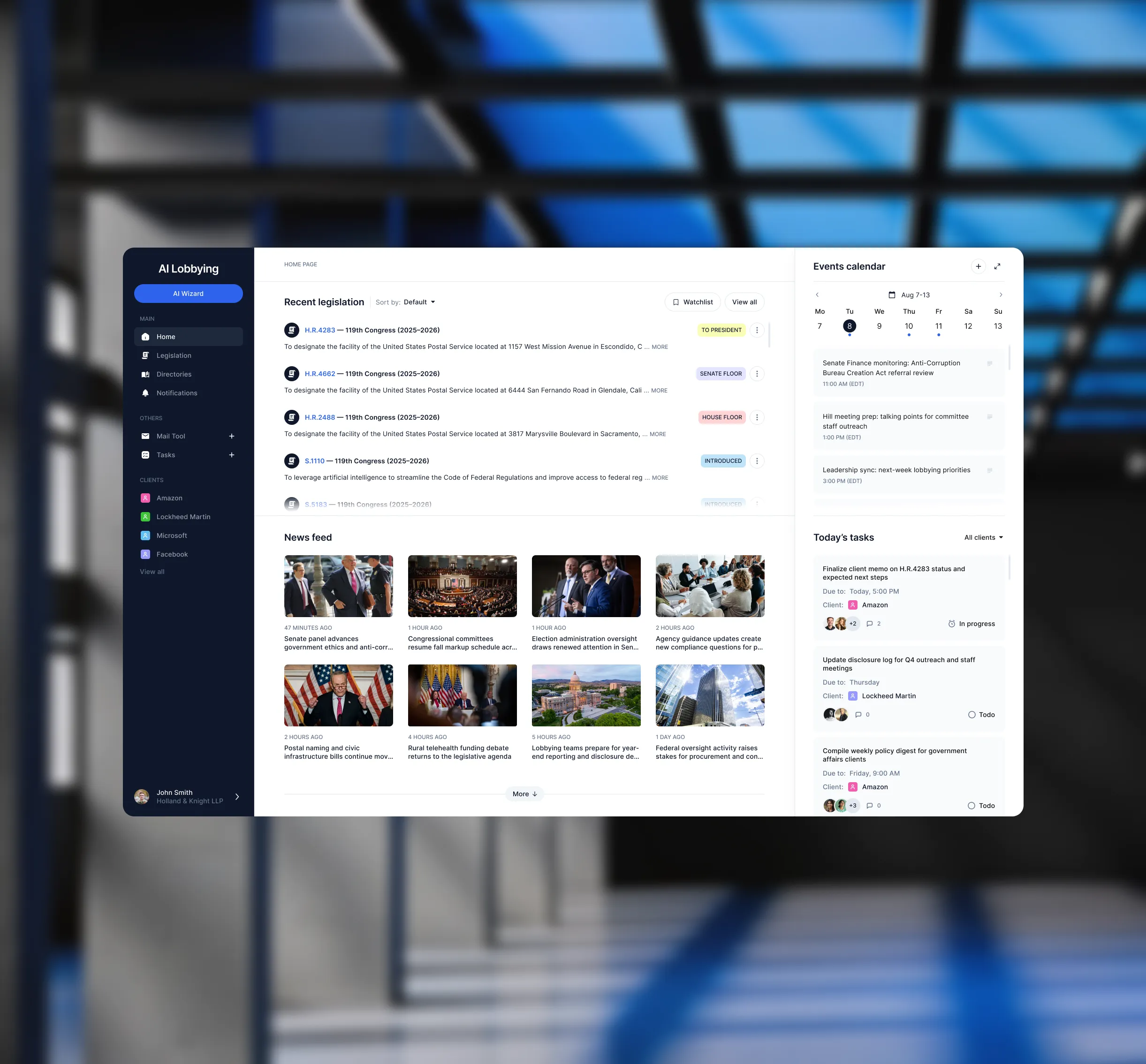
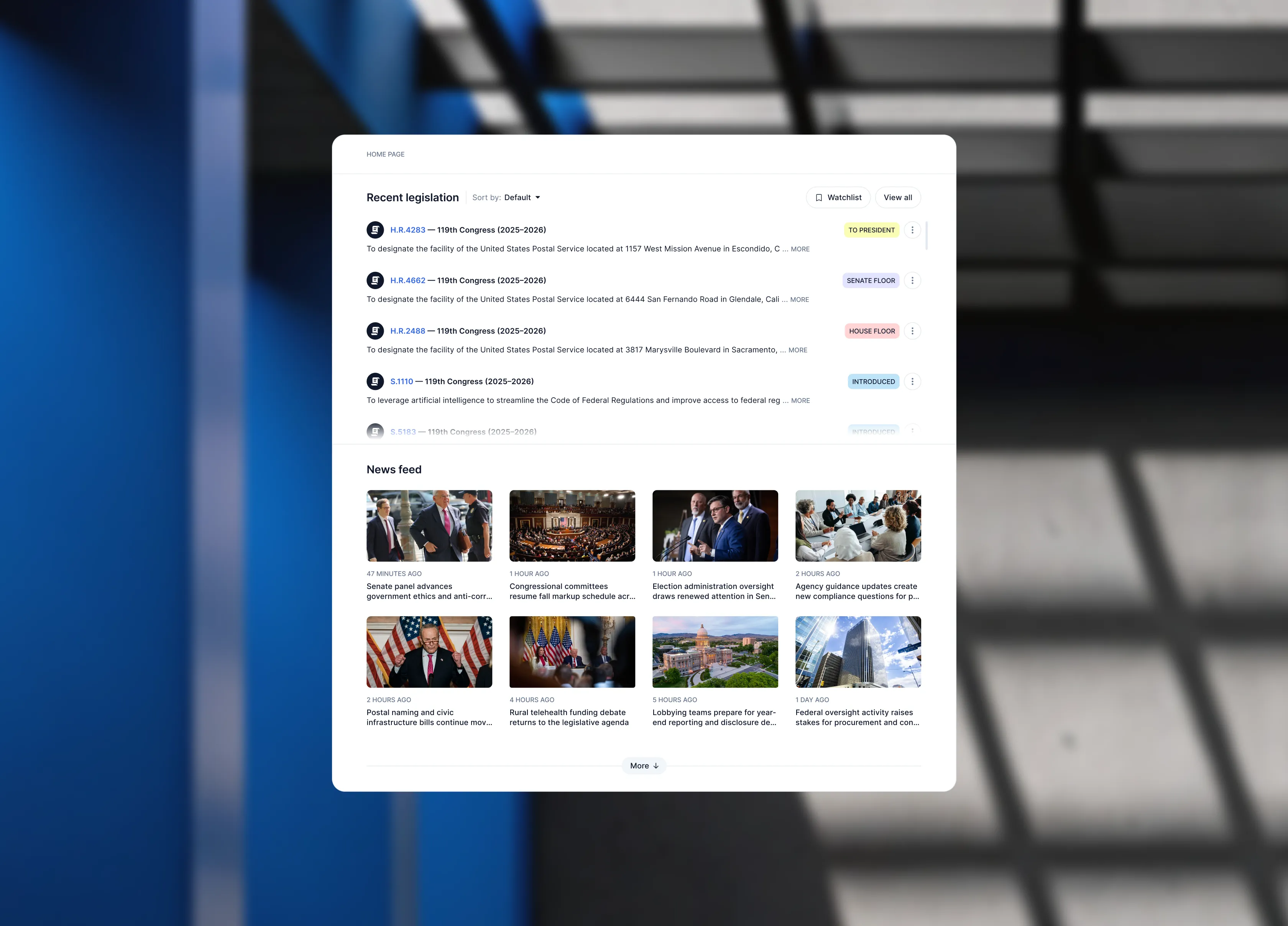
AI Platform for Legal Services legislative bills feed screen left
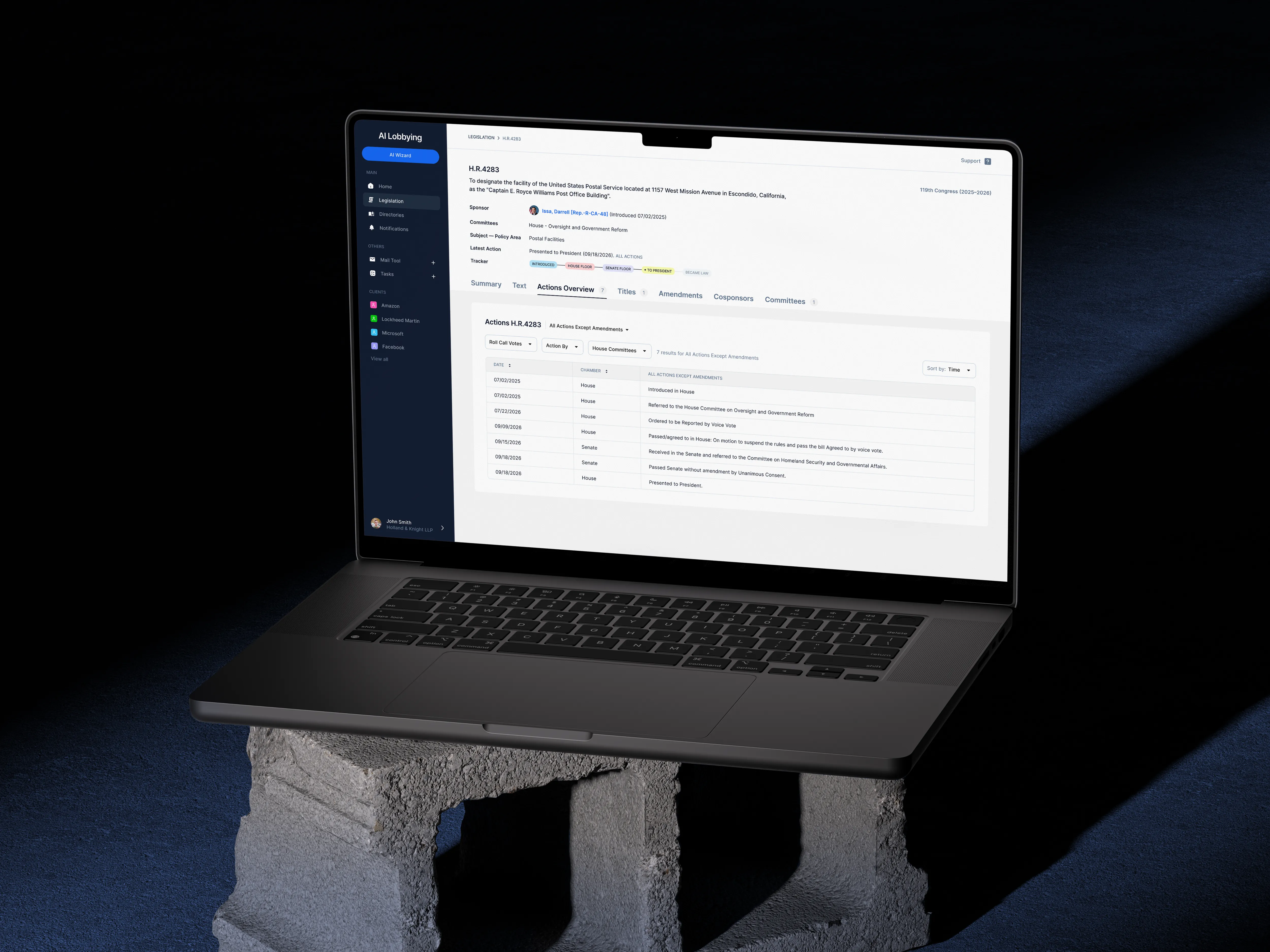
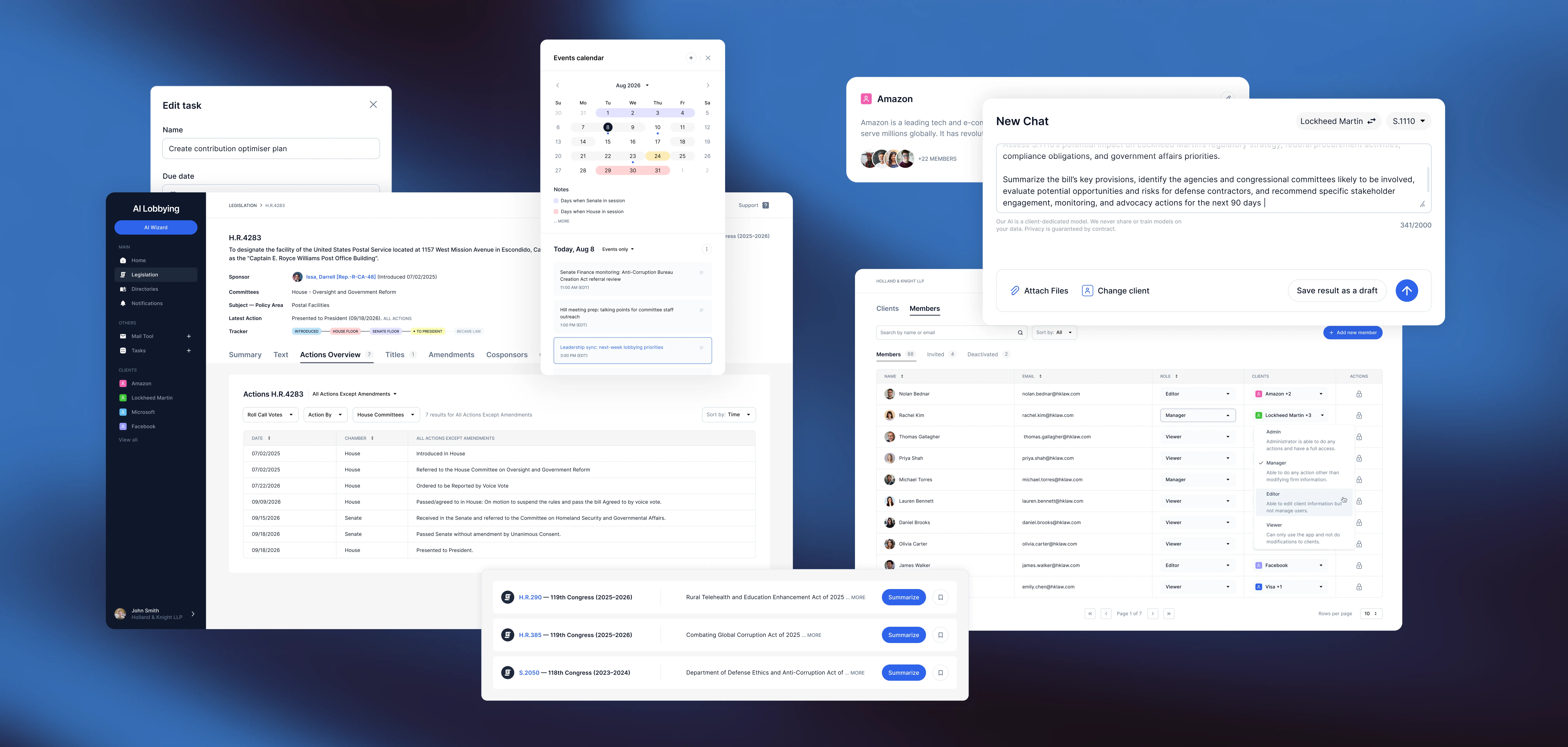
AI Platform for Legal Services bill details screen center
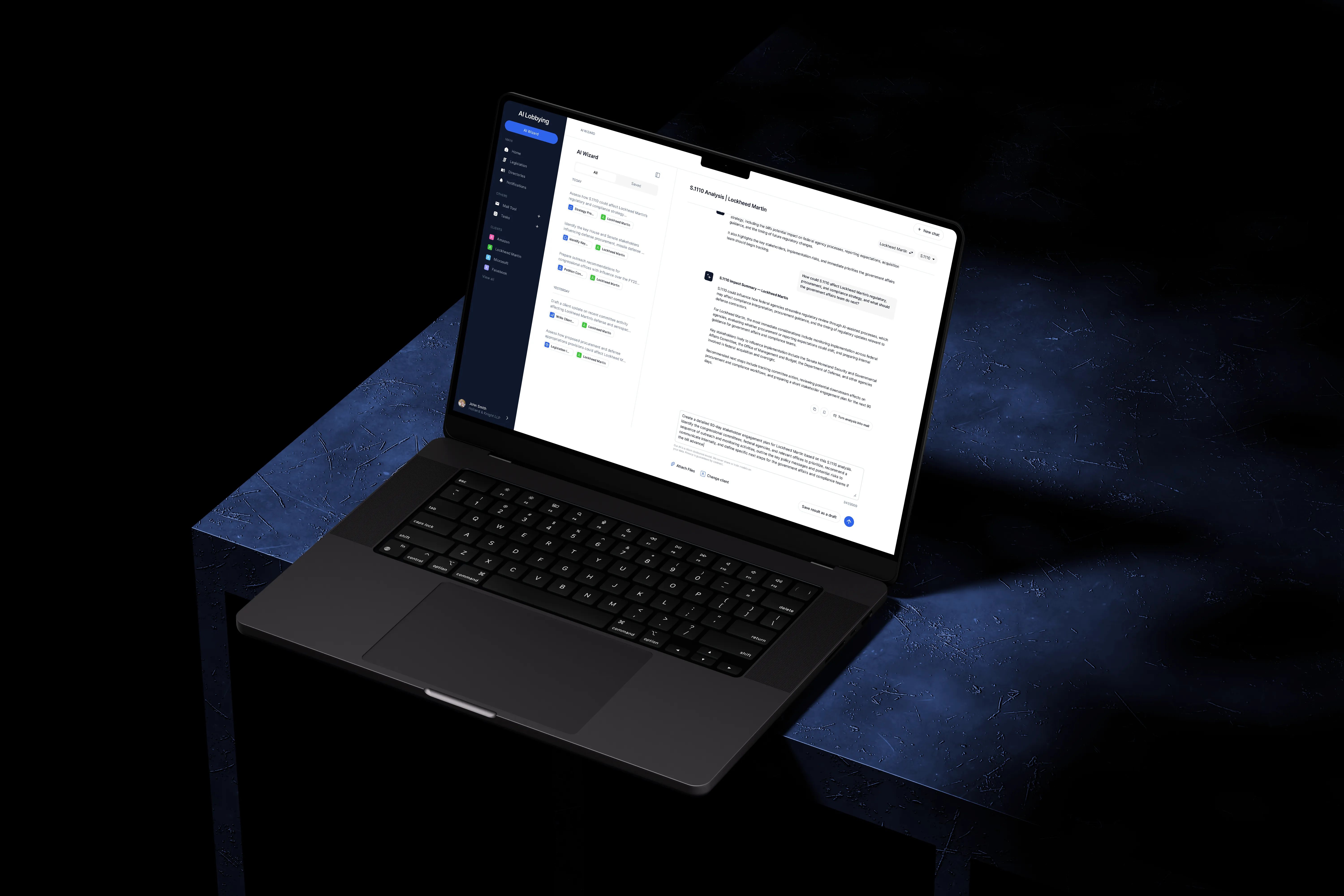
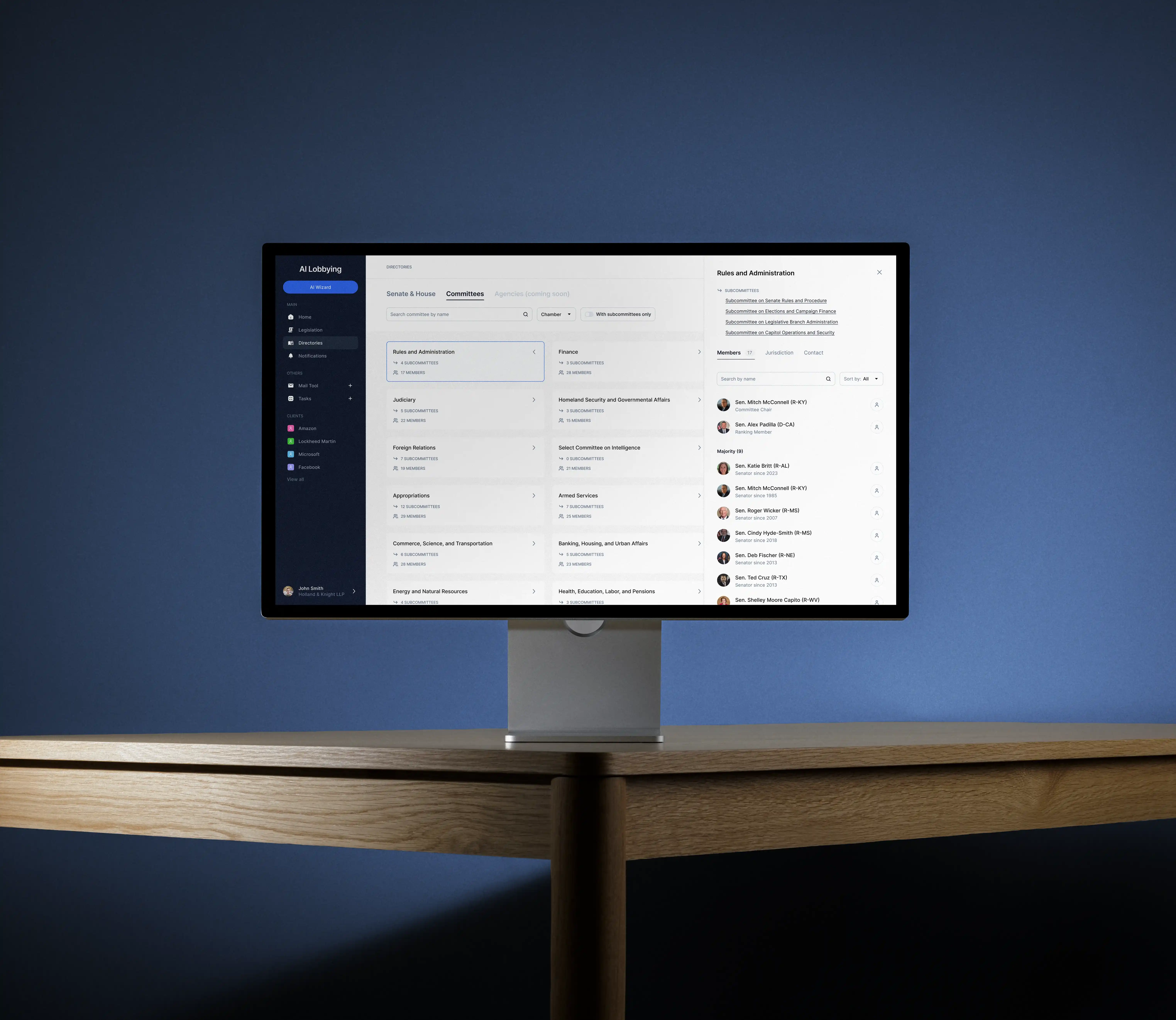
AI Platform for Legal Services Studio Display mockup right

Overview

B2B SaaS platform designed to simplify and automate the legislative and lobbying process for U.S. law firms and political representatives.

Product name and branding have been anonymized to comply with a Non-Disclosure Agreement (NDA). All structural workflows and core UX/UI decisions remain authentic.

My Role

Senior Product Designer

As one of the Product Designers, I led the UX/UI creation from concept to MVP, transforming fragmented state registries and complex legal workflows into a unified digital workspace.

Team:
2 Product Designers, 3 Developers, 1 DevOps, 2 PMs, 1 QA, Sales Rep

Result

Successfully delivered a launch-ready B2B MVP, transforming fragmented legislative workflows into a unified management dashboard with an integrated AI assistant and automated physical mail delivery.


Legislative tracking and compliance problem illustration

Problem

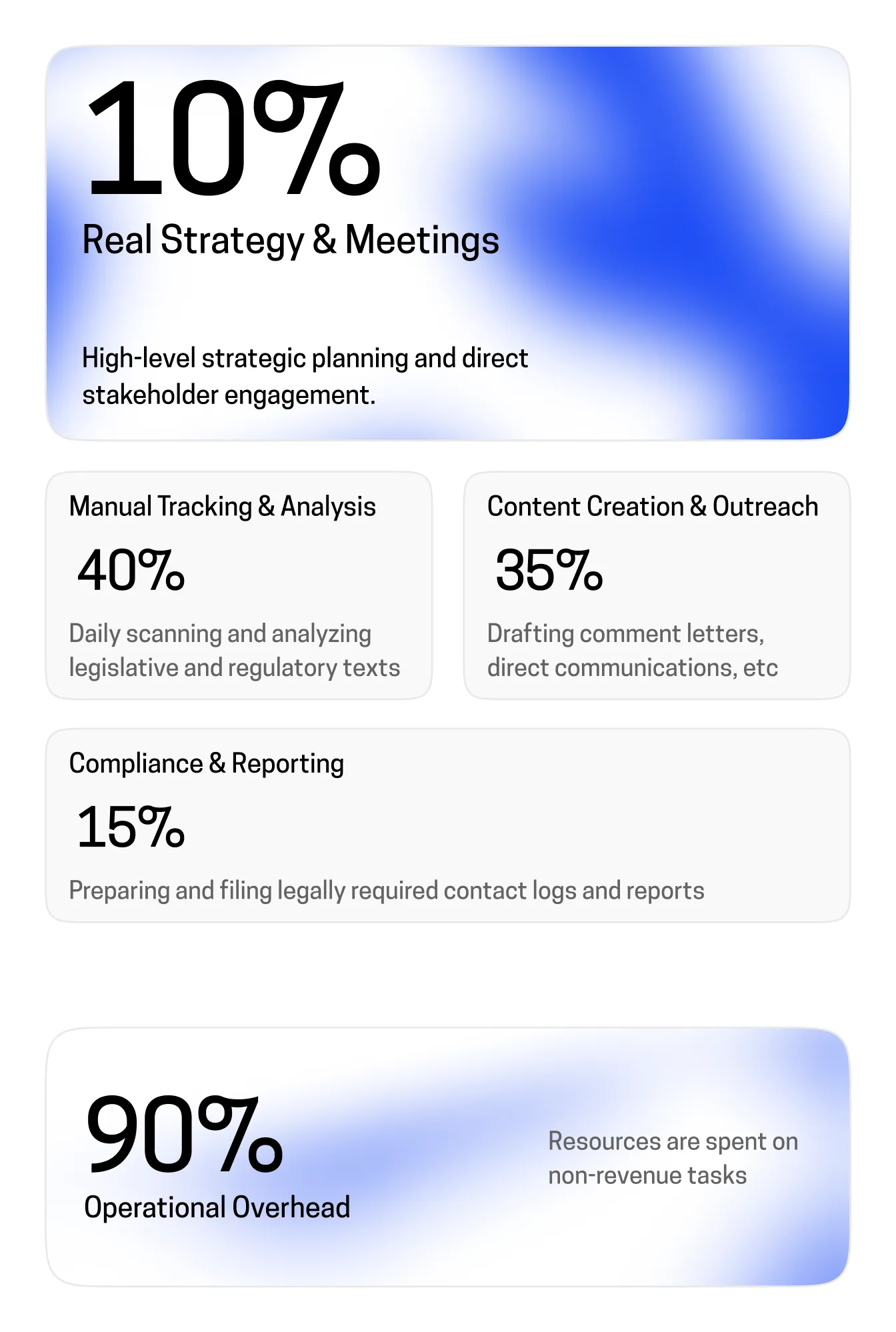
Traditional lobbying is deeply unoptimized and fragmented: legal teams waste hundreds of hours manually tracking state bills, regulations, committee updates, stakeholder activity, and reporting obligations across multiple jurisdictions at once. The challenge is not a lack of information, but the inability to turn scattered updates into timely action without creating compliance risk.

Compliance requirements add constant pressure: lobbying reports must be filed on strict cycles, rules differ by jurisdiction, and small mistakes can lead to penalties, audits, or reputational damage. This creates a workflow where teams are reactive instead of proactive, and where even routine tasks require too much manual coordination.

Key pain points:

Manual monitoring is time-consuming and difficult to scale
Important legislative changes can be missed
Compliance errors create legal and reputational risk
Reporting requirements differ across jurisdictions
Research and execution are fragmented across teams and tools
It is difficult to show clients clear progress and value

Ideation & Hypothesis

Instead of relying on fragmented state registries and endless email threads, we aimed to centralize the legislative workflow into a single AI-powered workspace. Our goal was to help legal teams track bill progression in real time, analyze complex policy impacts, and streamline official communications—both digital and physical. To validate our approach for the MVP, we framed our key bets into testable hypotheses:

  • Unified Tracking: If we combine state registries into a single feed of relevant policy changes, then legal teams will respond to legislative shifts faster and with less noise.
  • AI-Assisted Drafting: If AI automates the analysis of 100k+ word bills and generates initial drafts (amendments, summaries, talking points), then analysts will reduce first-pass research time from days to minutes.
  • Physical Mail Integration: If we integrate an automated physical letter delivery service, then response rates from official legal representatives (who frequently overlook emails) will significantly increase.
  • Team Collaboration: If team communication and task management are embedded directly alongside bill tracking, then legal firms will reduce friction and operational overhead.

Process

Discovery & Ecosystem Mapping

Beyond researching how the U.S. legislative system operates, we investigated the day-to-day operations of law firms — mapping both internal team collaboration and client-facing workflows to build a complete picture of the legal ecosystem
Auditing & Simplifying Legacy Wireframes

The client initially provided their own early concepts. I conducted a thorough UX audit, stripping away redundant steps to flatten the learning curve. Since our target audience consists of legal professionals (aged 30–50+) accustomed to traditional desktop software and heavy in-person meetings, the workflow had to feel familiar, low-friction, and intuitive from day one.

Modular Architecture & MVP Prioritization

Balancing client requests, tight deadlines, and complex legal constraints, I structured the product around four core modules: Issue Feed, Impact Analysis, Draft Generator, and Compliance Reporting Hub. This covered the end-to-end lobbying lifecycle while framing clear hypotheses, allowing us to prioritize essential MVP features versus post-launch capabilities.

Deep Legislative Research

I conducted secondary research into state political structures, bill progression stages, and government databases. Understanding how a bill moves from draft to presidential signature allowed us to build an accurate, logical mental model for lawyers.

AI Implementation

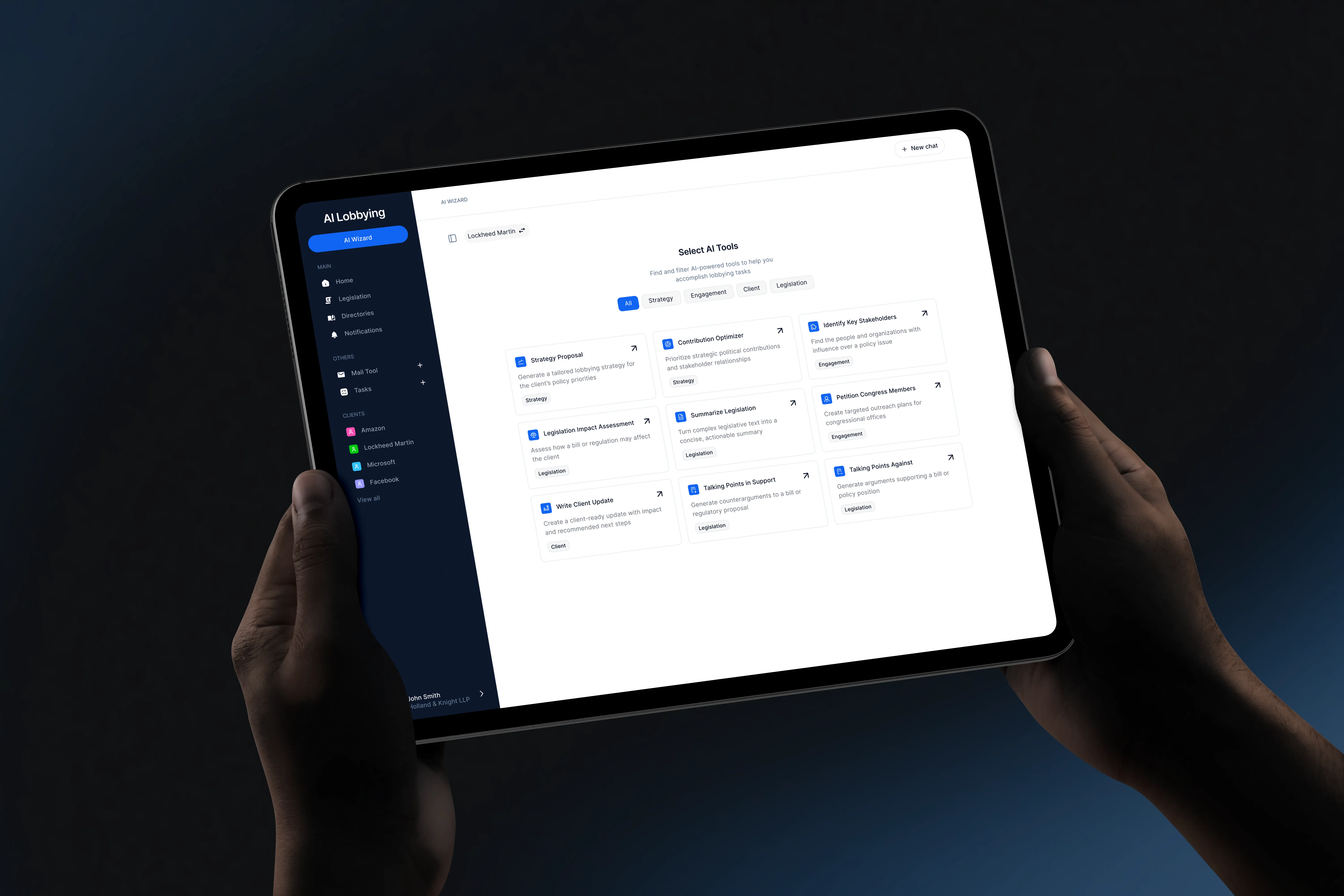
We designed AI as an integrated accelerator across the workflow—not a standalone chatbot. We prioritized high-friction tasks like extracting key clauses from massive bill drafts and drafting personalized stakeholder updates, drastically shortening analysis turnaround.

User Psychology & "Physical Mail" Insight

Through stakeholder and user interviews, we discovered that legal representatives (mostly 40+ years old) frequently ignore digital emails. To address this real-world behavior, we integrated an automated physical mail delivery service directly into the software.

Balancing Usability, Time & Constraints

Due to tight development timelines and the client providing their drafts, we skipped traditional wireframing. I adapted user flows on the fly and iterated on layouts directly alongside developers to maintain velocity without sacrificing user experience.

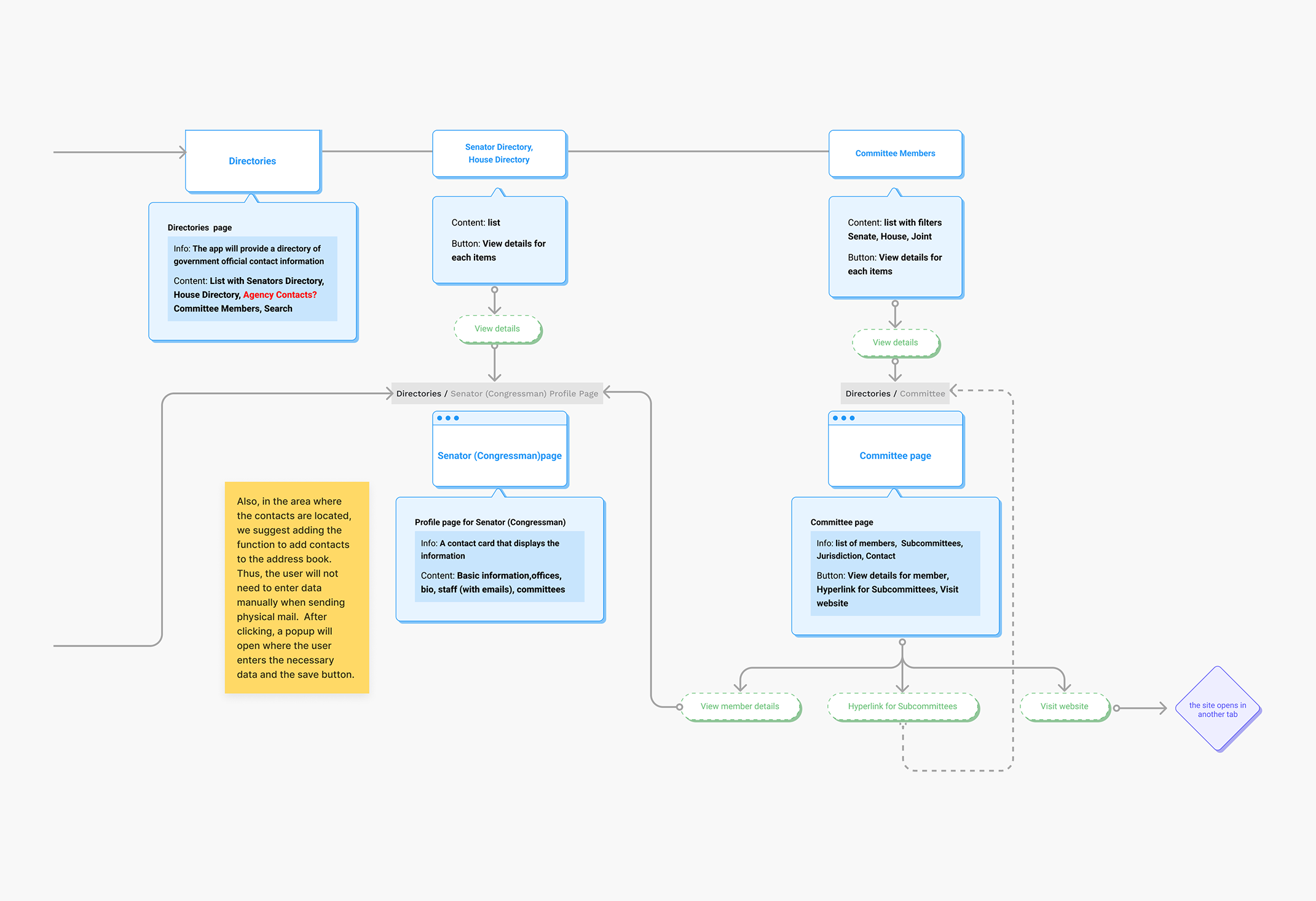
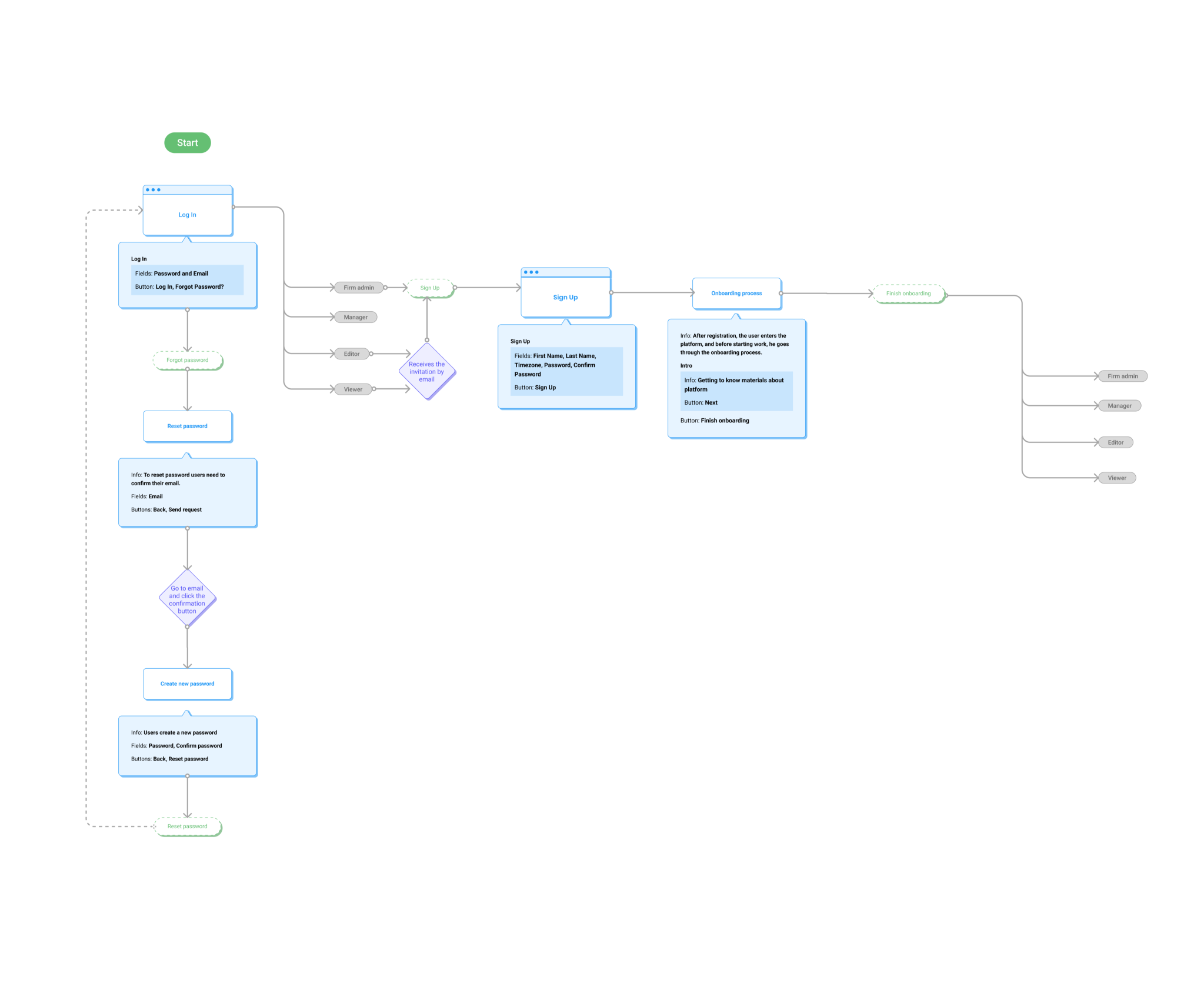
User journey mapping flow

Part of a First Flow

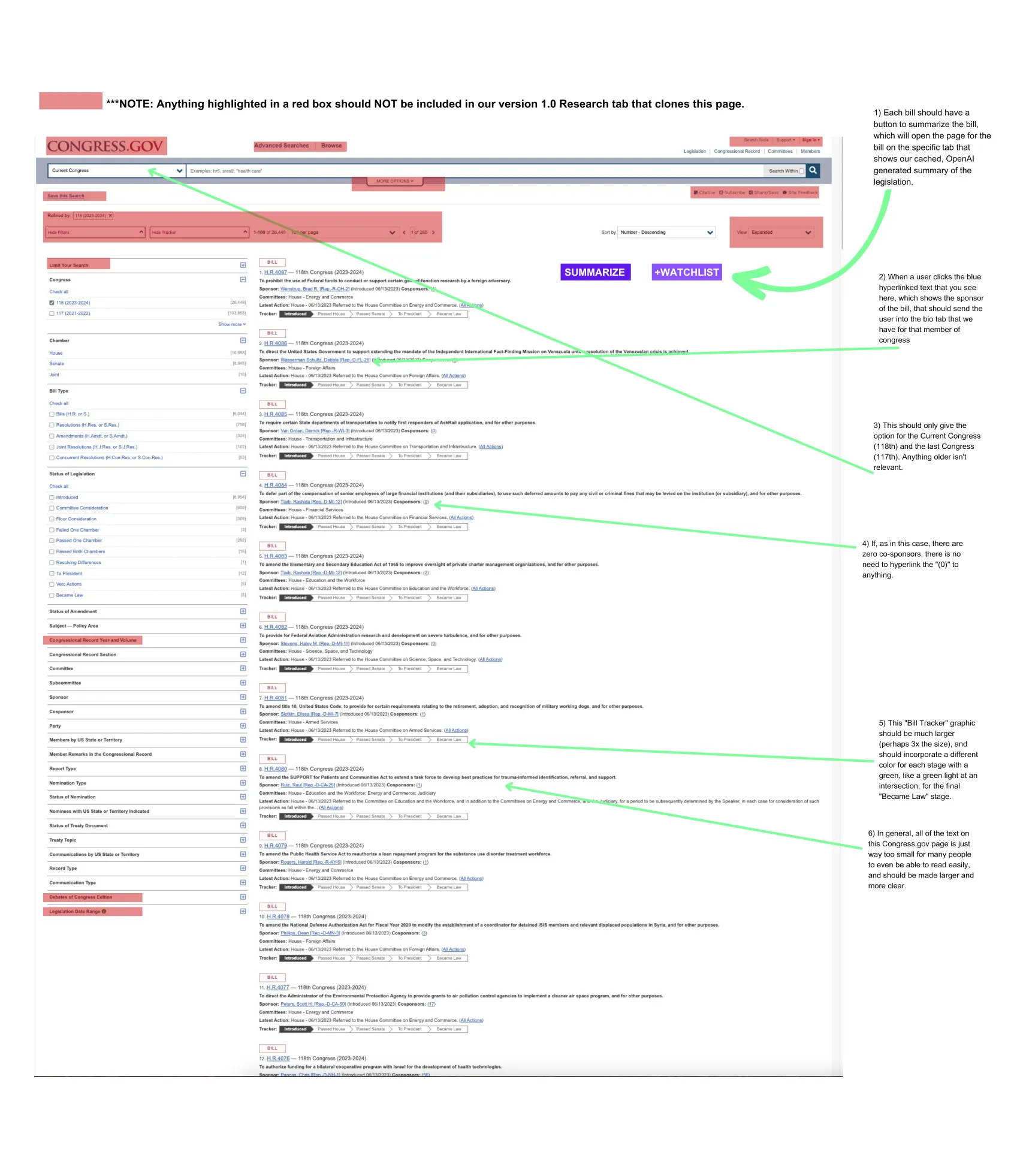
MVP scope definition and feature mapping

Some of the notes from an analysis & discussions with stakeholders

Workflow states exploration

Part of a Flow


AI Platform for Legal Services solution overview

Solution

I designed an AI-powered collaborative B2B platform that unifies workflows, bill tracking, and communication between lobbying firms, internal teams, and their clients. By automating manual data processing with AI and streamlining team collaboration, the platform drastically reduces research time while eliminating legal and compliance risks.

AI Platform for Legal Services Studio Display overview mockup

Centralized Workspace & Multi-Tenant Dashboard

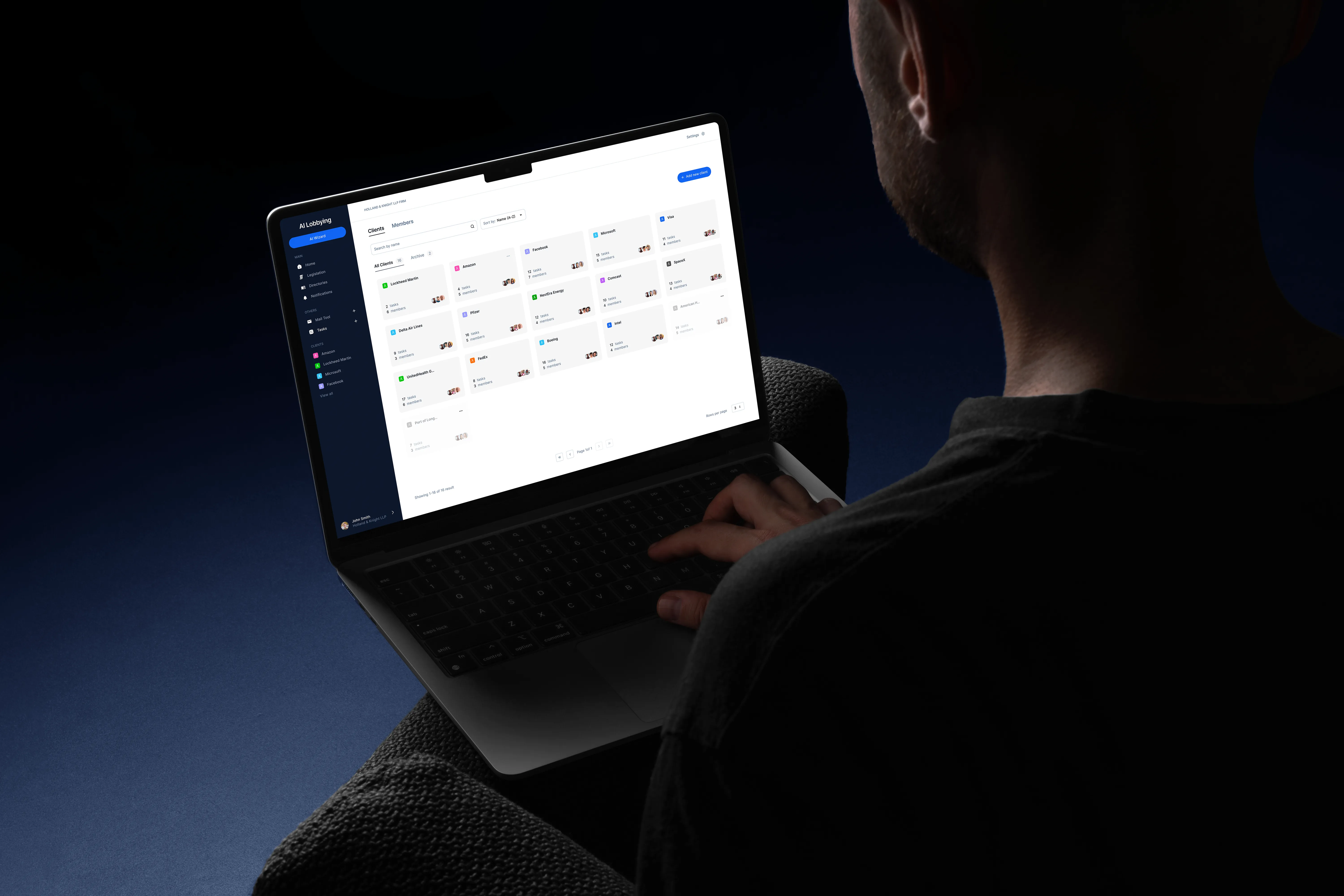
Built a secure, multi-tenant architecture where each law firm operates in its own isolated environment. Centralized team communication, client interactions, meeting logs, and task management into a single dashboard, eliminating fragmented data silos and preventing compliance risks caused by lost records.

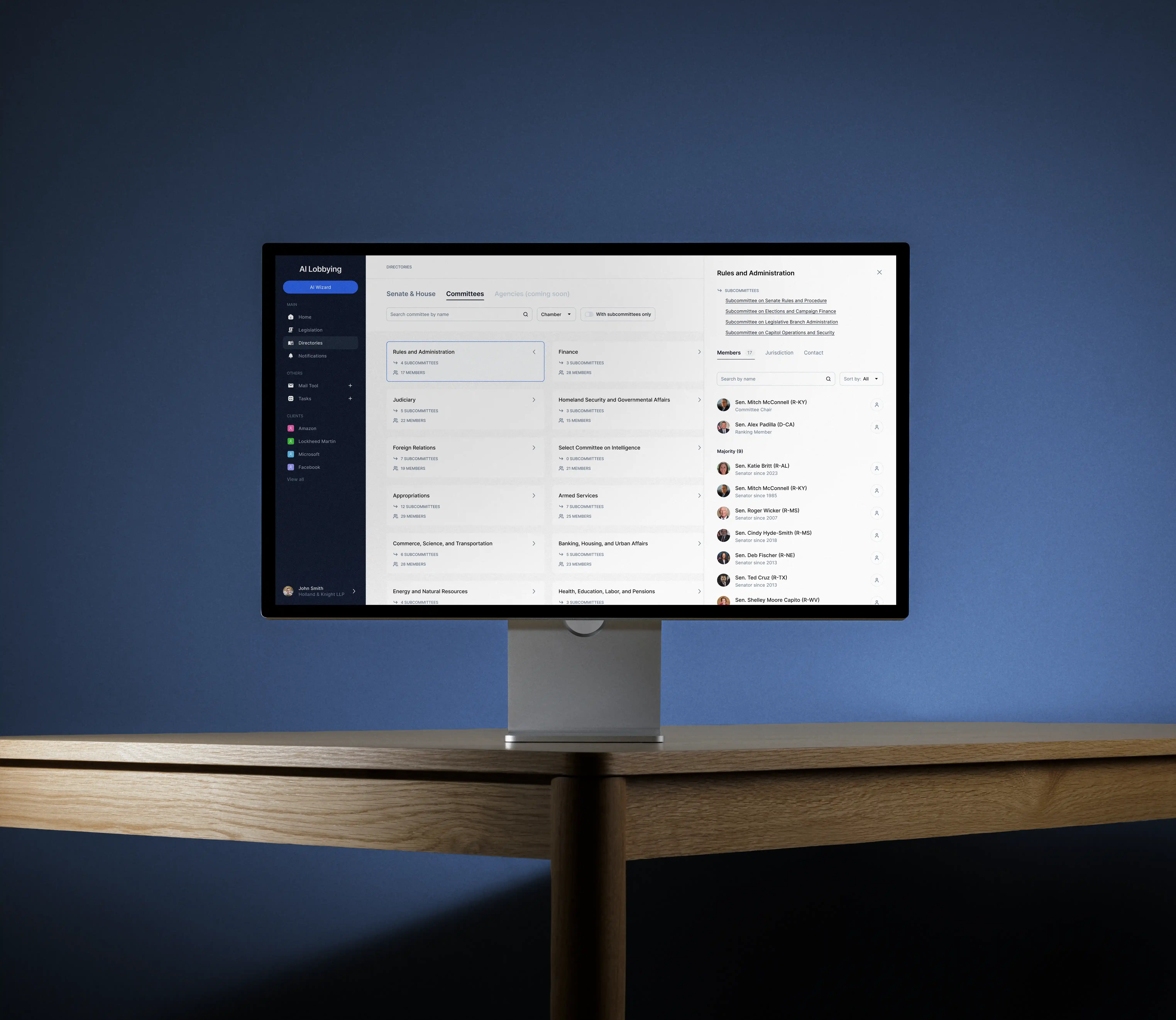
Automated Bill & Legislator Tracking interface

Automated Bill & Legislator Tracking

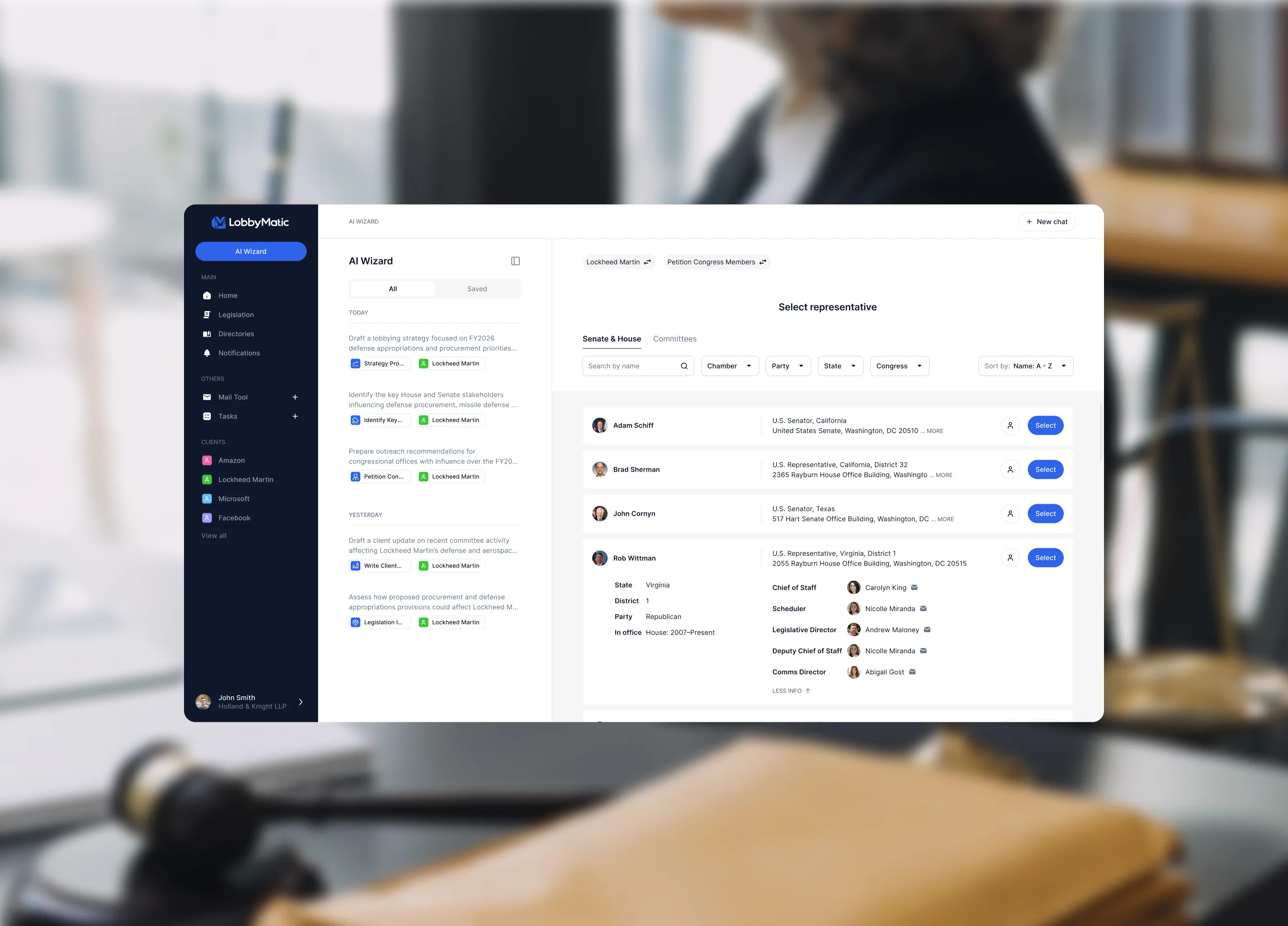
Simplified a complex information hierarchy by structuring a clear, automated pipeline connecting state and federal bills with Congress members, clerks, and key decision-makers. The system automatically pulls status updates in real time, integrating government data directly into the firm's daily workflow without requiring manual checks.

Legislative monitoring detail view
Human-in-the-Loop AI Assistant workflow

Human-in-the-Loop AI Assistant

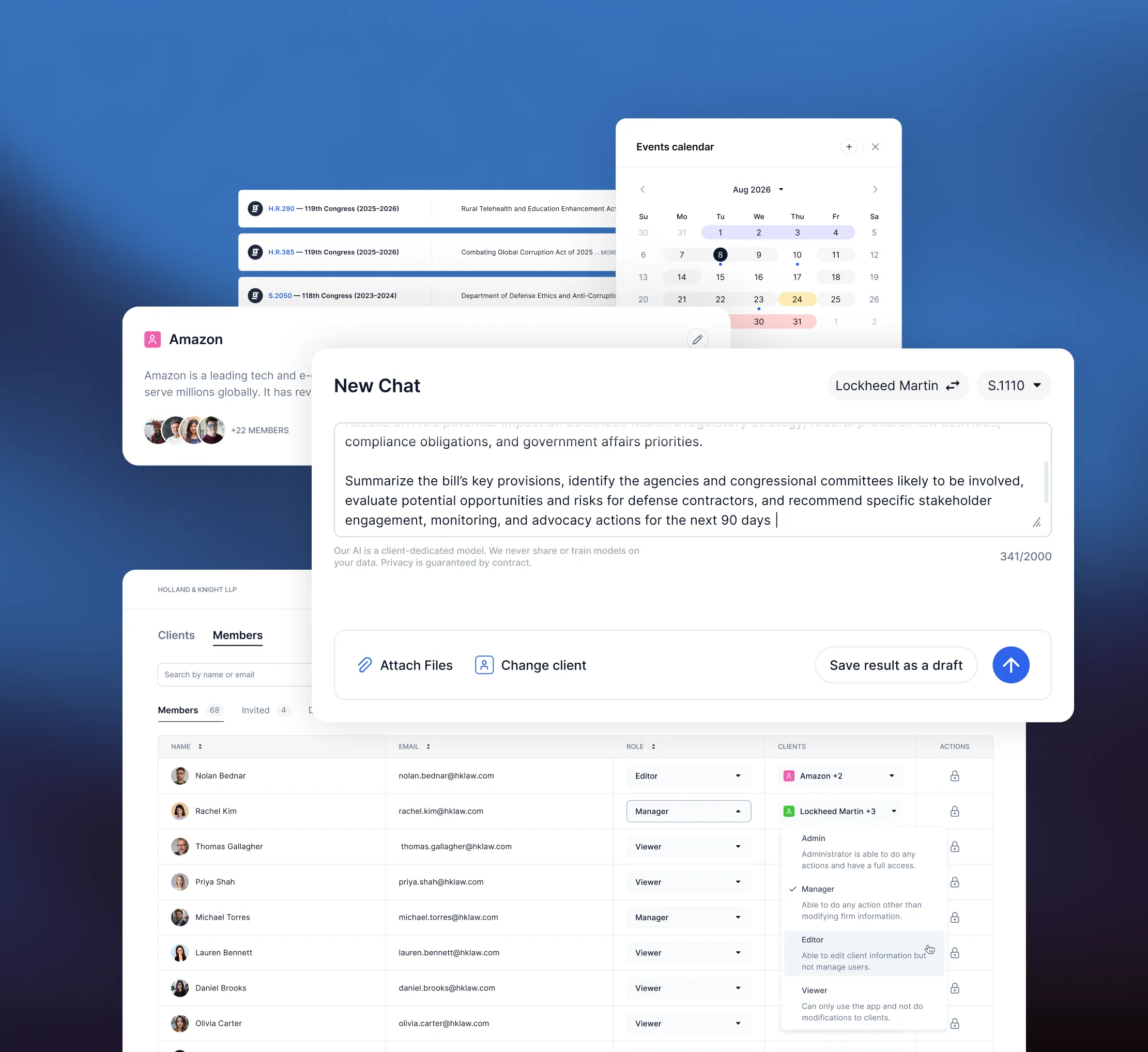
Integrated an AI drafting and analysis wizard to summarize 100k+ word legislation bills and generate initial drafts for letters, amendments, and client updates. To ensure legal precision, we implemented a Human-in-the-Loop UX pattern — positioning AI as an accelerator that speeds up routine drafting while keeping human verification mandatory for compliance.

Physical Mail Integration workflow

Physical Mail Integration

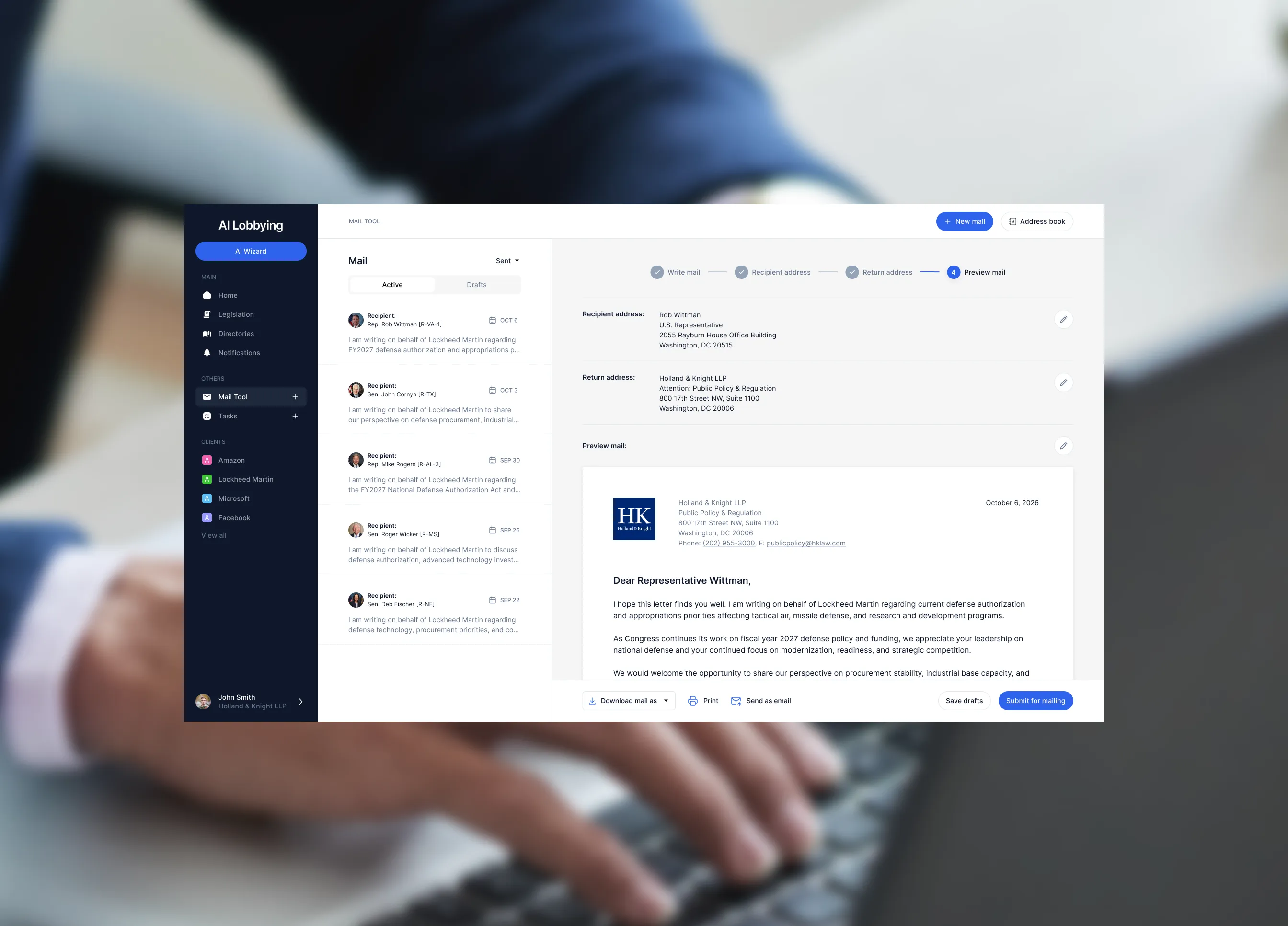
Recognizing that official representatives frequently overlook digital emails due to inbox clutter, we built a 1-click physical mail delivery flow. This secondary dispatch system acts as a fail-safe communication layer, ensuring official letters are printed and delivered physically when email response rates drop.

AI Platform for Legal Services comprehensive overview
Curated Legal & Policy News Feed

Curated Legal & Policy News Feed

Integrated a smart, noise-filtered news feed that surfaces high-priority regulatory updates relevant to the lobbying sector. Instead of drowning users in generic news, it delivers targeted policy triggers that directly influence client strategy and firm decision-making.


Results

Proactive Workflow Shift

Transformed lobbying firms from a reactive stance (manually searching for updates) to a proactive workflow by consolidating communications, meeting logs, and automated bill tracking into a single source of truth. This automated approach delivers timely, noise-filtered policy triggers while eliminating data silos and compliance risks

AI-Driven Research Efficiency

Leveraged AI summarization and drafting tools to reduce first-pass legislative research and document preparation time by approximately 3x, freeing analysts to focus on high-value strategic advisory rather than manual processing.

High-Deliverability Communication System

Established a dual-channel dispatch model combining digital workflows with automated physical mail. This fail-safe mechanism significantly increased response rates from official representatives and guaranteed that critical communications were never lost in digital noise

AI Platform for Legal Services project results dashboard mockup

Learnings

Key takeaways of what I've learned on this project.

Compliance & Security Over Flashy Features

In LegalTech and government affairs, data security and regulatory compliance must always come first — regardless of how attractive or innovative a feature might seem. Building trust and respecting strict legal boundaries is the true foundation of product success in complex domains.

Diverse User Mental Models & Real-World Behaviors

What feels obvious to a designer is not obvious to every user. Age, technical literacy, and daily habits shape user behavior. Designing for seasoned legal professionals (30–50+) taught me to respect real-world constraints — such as their preference for physical mail over digital overload — rather than forcing purely digital assumptions.

Navigating Technical Stakeholders & Team Alignment

Working with technical clients or developers who can build features independently requires strong design leadership. When stakeholders implement ideas without prior team alignment simply because "they have the technical capability," it can disrupt momentum. I learned that maintaining continuous cross-functional alignment and advocating for a shared product vision is essential for long-term efficiency.


Next Projects